If you missed the first installment of pictures and stories from St. John's, Newfoundland, you can find part one here. Alycia and I arrived in Newfoundland and had a few days before her conference started, so we ventured out to see as much of the island as we could.
 We took a day trip to see the next peninsula to the West over from St. John's, which included the town of Elliston, the self-proclaimed "Root Cellar Capital of the World". Here John poses with one of the root cellars, many of which looked to have been used for many years. To their credit, yes there were a lot of root cellars, but I'm not sure that slogan is going to attract hordes of tourists.
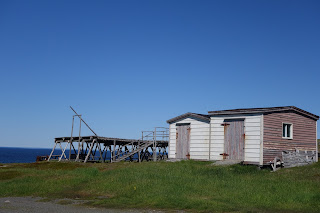 This is a fish flake, a traditional wooden stand used for drying and preserving fish. They aren't used much anymore in modern times, but some some fish flakes in the small towns and hamlets were left intact to demonstrate how fishing was conducted for generations in Newfoundland
 Alycia is posing here on the road to Bonavista, where John Cabot is supposed to have first landed in North America. If you look closely on the horizon you can see white specks floating on the water. These are icebergs! They calve off glaciers in Greenland and can take years to work their way down the Eastern Coast of Newfoundland into Iceberg Alley (along the Eastern Coast of Canada and the US) before eventually melting.


